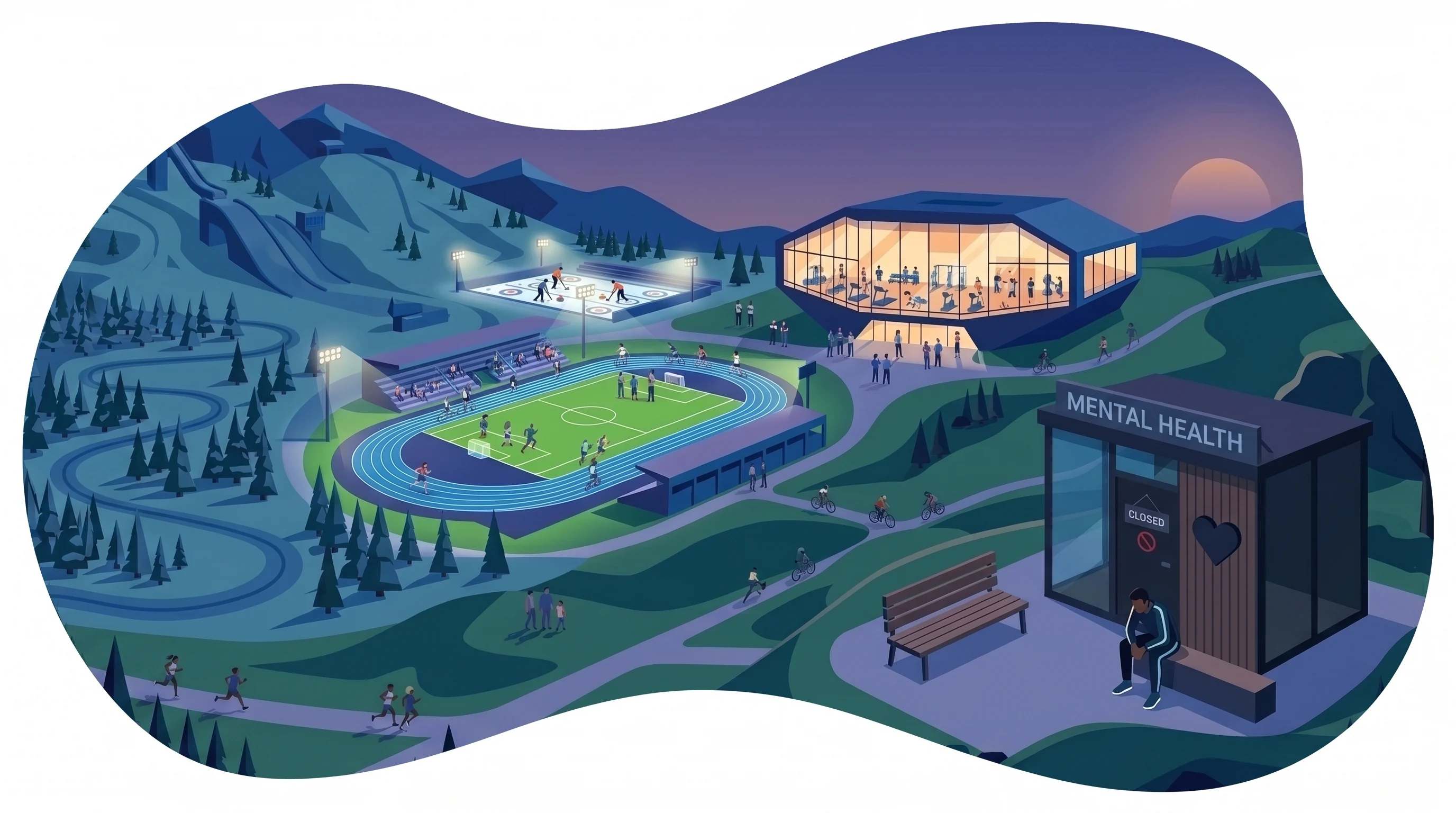
Speaking up feels like deselection
Selection is competitive and careers are short. Admitting you are struggling can feel like handing your spot to the next athlete on the list — so most simply don’t.
About · The problem
An athlete should know where to turn, what happens next, and how to raise a concern when support falls short. MindsMelt is developing practical guidance and an organisational improvement framework around those needs.
Can I find a suitable person to talk to?
Do I understand how my information will be handled?
Can I ask for a change without unfair consequences?
Why athletes stay silent
It is tempting to read 72% as shyness. It is not. Sport’s incentives are built in a way that makes silence the rational choice — which is exactly why the fix has to be structural too.
Selection is competitive and careers are short. Admitting you are struggling can feel like handing your spot to the next athlete on the list — so most simply don’t.
When you have been "the swimmer" since you were nine, distress reads as a threat to who you are, not just how you feel. Asking for help means questioning your own identity.
Sport teaches athletes to push through pain — that is half the job. The same reflex that wins medals makes psychological distress look like something to endure, not report.
A career lasts a decade if you are lucky. Losing a season to "getting help" feels unaffordable, so problems are postponed until they are crises.
When it breaks
Distress in sport is not random. It clusters around predictable transitions — which means a governed organisation can prepare for them. Most don’t.
Identity, routine and team contact vanish overnight while the body heals — and nobody checks on the rest.
Cut from a squad with a phone call. The support structure disappears at the exact moment it is needed most.
One in three athletes struggles seriously after leaving sport. The end of a career is a predictable, plannable crisis — that almost nobody plans for.
A missed penalty or a fall is replayed publicly, endlessly. The scrutiny is professional; the human absorbing it is not protected.
The governance gap
Most organisations genuinely care. But caring is invisible from the outside, and unverifiable from the inside. Without a standard there is no floor, no benchmark, and no way for an athlete or a parent to know what they are walking into.
01
Anything can call itself athlete welfare — a poster, a hashtag, an unstaffed email inbox. Nothing separates the serious from the cosmetic.
02
A parent choosing between two academies has detailed data on coaching and facilities — and nothing at all on how either one handles a struggling fifteen-year-old.
03
When wellbeing fails, there is no suspension, no revocation, no public record. The reputational cost of neglect is zero until it becomes a headline.
The conclusion
Awareness campaigns ask individuals to be brave inside a system that punishes them for it. A published, verified standard changes the system instead: it gives organisations something to prove, athletes something to check, and neglect a cost.
you do not have to wait for sport to fix its governance. Free, confidential support exists right now.